Creating Privacy with Strategic Landscaping: Natural Solutions for Northeast Florida
Andrew Davis
Do you step into your backyard only to wave at your neighbors through the gaps in your fence? Or maybe you’re tired of seeing cars drive by while you try to relax on your patio? Privacy issues affect many Northeast Florida homeowners, especially as communities grow and homes sit closer together.
At Amelia Lawn & Landscaping Services, we hear these concerns daily from homeowners in Fernandina Beach, Yulee, and across Nassau County. The good news is that smart landscaping choices can transform your outdoor space into a secluded retreat.
Let’s explore how strategic planting can create the privacy you need without building fortress-like walls around your property.
Why Choose Plants for Privacy Instead of Fences?
Plants offer more than just visual screening. They absorb noise, block wind, reduce dust, and provide food and shelter for wildlife. Unlike static fences or walls, living barriers add texture, movement, and seasonal interest to your landscape.
Other benefits include:
Natural beauty that blends with your existing landscape design
Improved property value with mature landscaping
Better air quality around your home
Reduced energy costs by blocking summer sun and winter winds
No permit requirements in most cases (unlike tall fences)
Best Privacy Plants for Northeast Florida
Finding the right plants for privacy in our unique climate requires local knowledge. Northeast Florida presents specific challenges with heat, humidity, occasional frost, and, for coastal properties, salt exposure. Here are the top-performing options that thrive in our region:
Fast-Growing Trees for Quick Privacy
Want rapid results? These trees can help create privacy relatively quickly:
Little Gem Magnolia: This compact version of the Southern Magnolia grows 1-2 feet yearly and tops out at 20-25 feet. Its glossy leaves and fragrant white flowers make it both functional and beautiful.
Wax Myrtle: A Florida native that grows quickly to 10-15 feet tall with minimal care. It handles wet conditions well and produces berries that attract birds.
Leyland Cypress: Grows 3-4 feet per year and can reach 40-60 feet. Forms a dense wall of soft, feathery foliage.
East Palatka Holly: Grows 35-45 feet tall with a pyramidal shape. The red berries add winter interest, and its salt tolerance makes it perfect for coastal properties.
Top Privacy Shrubs for Florida Properties
Shrubs form the backbone of most privacy screens. These varieties perform exceptionally well in Northeast Florida:
Viburnum: Fast-growing evergreen shrubs that can reach 10-15 feet tall. Sweet Viburnum and Walter’s Viburnum are exceptionally reliable in our climate.
Podocarpus: Creates a formal hedge with dense, dark green foliage. It can grow 20-25 feet tall but responds well to regular pruning.
Bottlebrush: This plant features distinctive red brush-like flowers that attract hummingbirds. It grows 15-20 feet tall and has a spread of 15 feet.
Simpson’s Stopper: A Florida native with white flowers and colorful berries. Salt-tolerant and grows 10-20 feet tall.
Ornamental Grasses for Layered Screening
Grasses add movement, texture, and a natural feel to privacy screens. These varieties thrive in our area:
Pampas Grass: Grows quickly to 8-12 feet tall with showy plumes. Creates a dramatic privacy screen.
Muhly Grass: A Florida native with stunning pink or purple plumes in fall. Reaches 3-4 feet tall and works well in groupings.
Fakahatchee Grass: Another Florida native that grows 4-6 feet tall with an elegant, arching form.
Strategic Planting Designs for Privacy
How you arrange plants matters as much as which plants you choose. Let’s look at effective design approaches for different privacy needs:
Layered Planting for Natural-Looking Screens
Layered planting creates depth and interest while providing effective screening. This approach relies on diverse plant life and a staggered layout that feels organic while achieving privacy.
To create a layered screen:
Plant taller trees in the background at staggered intervals (not in a straight line)
Add medium-height shrubs in the middle layer
Fill in with ornamental grasses and flowering perennials in front
This method creates a more natural look than a single-species hedge and offers better protection against pests and diseases that might target one plant type.
Solutions for Small Lots
Limited space doesn’t mean you can’t have privacy. For smaller Northeast Florida properties, consider these approaches:
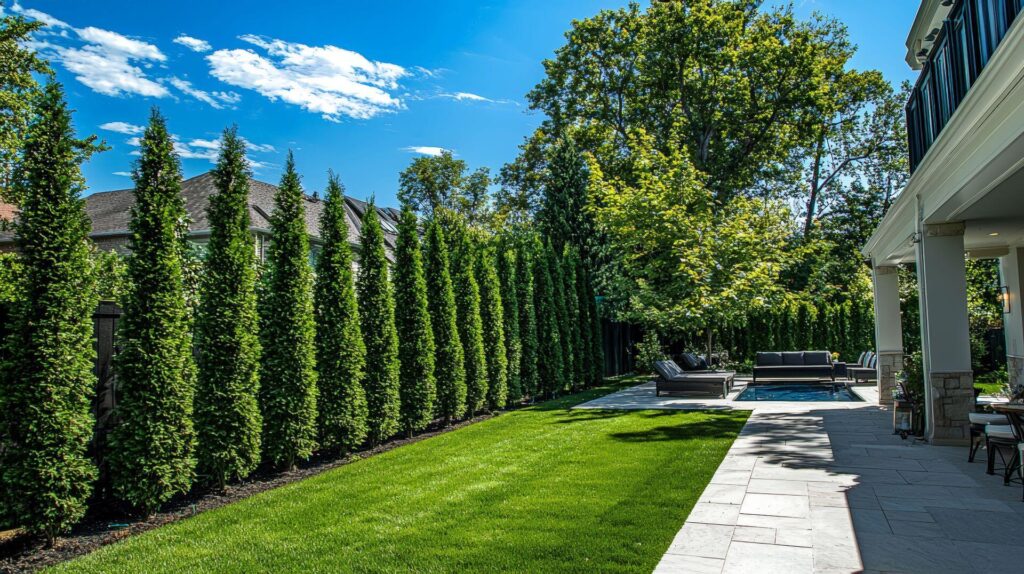
Slender, columnar trees like Italian Cypress that grow up, not out
Vertical gardening with trellises and vines like Confederate Jasmine
Container plantings that can be positioned exactly where needed and moved as desired
Strategic placement of just a few plants to block specific sightlines
Creating Privacy Between Defined Areas
Privacy isn’t just about perimeter screening. Within your property, you might want to separate different areas like a patio, pool, or hot tub. For these situations, consider:
Decorative wooden screens with climbing plants
Large container plants grouped to form a living wall
Raised planter beds with mixed shrubs and perennials
Ornamental grasses that provide seasonal privacy when they reach full height
Maintenance Considerations for Privacy Plantings
Beautiful privacy screens require proper care. Here’s what to expect with different options:
Low-Maintenance Privacy Plants for Coastal Areas
If you live near the coast in Nassau County or Amelia Island, these salt-tolerant, low-maintenance options work well:
Sea Grape: Naturally shaped by coastal winds, this native plant needs almost no care once established.
Silver Buttonwood: The silvery foliage easily handles salt spray and requires minimal pruning.
Yaupon Holly: A versatile native that tolerates poor soil and coastal conditions.
Formal Hedges vs. Natural Groupings
Formal hedges require regular pruning to maintain their shape and density. Plan on trimming 2-3 times during the growing season. Natural, informal plantings need less frequent maintenance but may look less manicured.
When deciding between formal and informal styles, consider:
How much time can you dedicate to maintenance
Your landscape’s overall style
How quickly do you need privacy (formal hedges often provide screening faster)
Water and Fertilizer Requirements
New privacy plantings need regular water during their first year to establish strong root systems. After establishment:
Most native plants require minimal supplemental water
Group plants with similar water needs together
Apply a slow-release fertilizer in early spring
Mulch around plants to retain moisture and reduce weeds
Planning Your Privacy Screen: Next Steps
The best privacy solutions consider your specific needs, property conditions, and maintenance preferences. Before planting, think about:
Which areas need the most privacy
How quickly do you need results
Your soil type and drainage patterns
Existing trees and structures that affect sun exposure
Your tolerance for maintenance tasks
At Amelia Lawn & Landscaping Services, we create custom privacy solutions for Northeast Florida properties. Our team assesses your specific needs and site conditions to recommend the right plants and placement for effective, beautiful screening.
In our region, the best time to plant trees and shrubs is fall through early spring, when temperatures are milder and rainfall is more reliable. This gives plants time to establish before summer heat arrives.
Ready to transform your open, exposed yard into a private retreat? Contact us for a consultation, and we’ll help you create the secluded outdoor space you’ve been dreaming of, one plant at a time.